About this activity
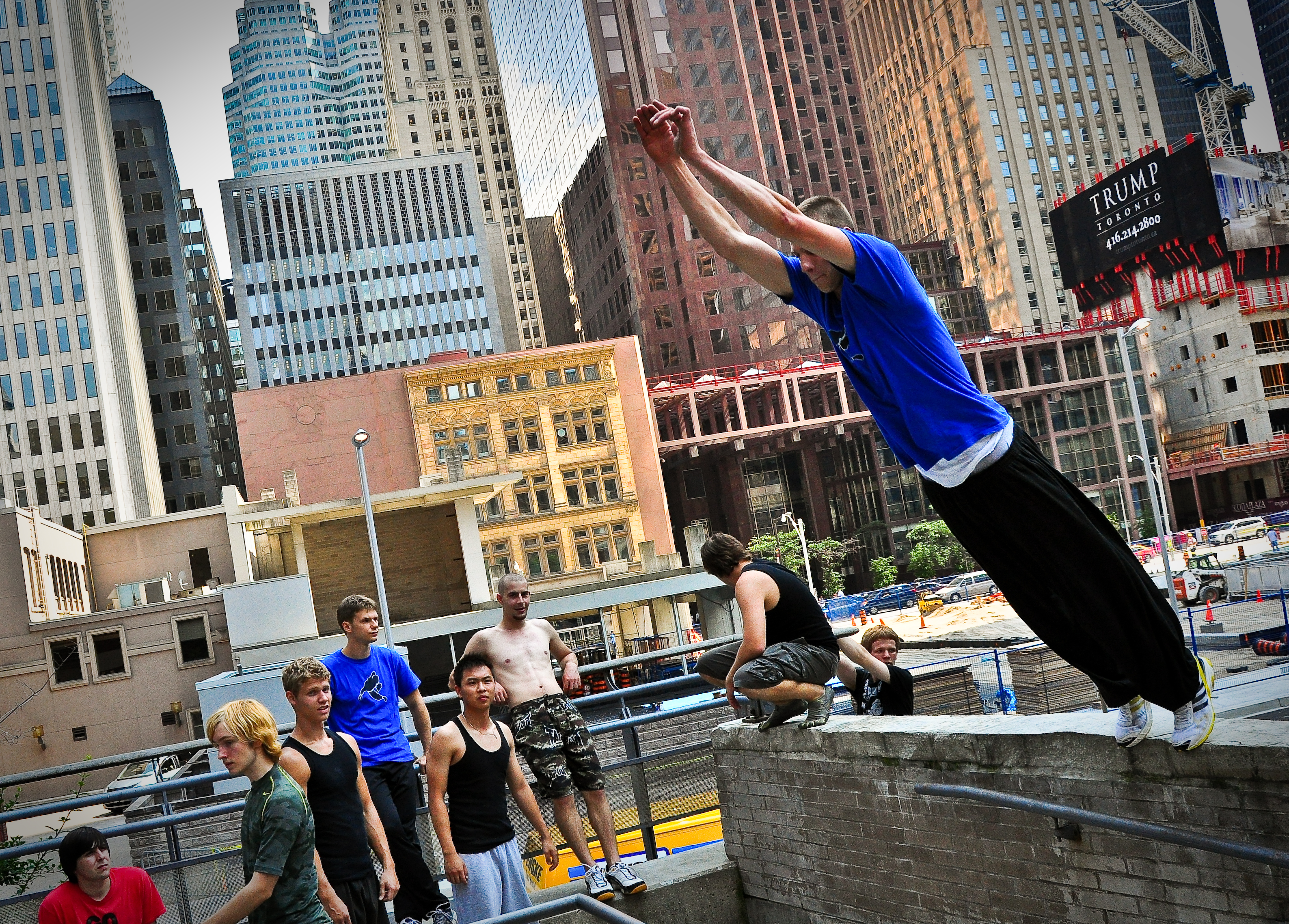
Parkour is form of physical training in which practitioners, called “traceurs”, attempt to navigate a complex environment from one point to another in the quickest and most efficient way possible, using only their bodies. This often entails running, jumping, swinging, hurtling, vaulting, climbing and tumbling over, through and around structures in urban and nature settings. Not only is parkour a physically challenging discipline, it equally involves being able to see one’s environment differently and imagine the potential to navigate its structures in new and creative ways. Traceurs may practice alone or in groups. Gym facilities especially catered to parkour also exist for individuals who prefer to practice in safer, more controlled environments.
Origins & history
Parkour originates from a method of physical training developed by a French naval officer and physical educator, George Hébert, in the early 20th Century. Hébert laid the foundations for the development of a French military obstacle course, the “parcours du combatant,” which eventually inspired the the practice of parkour in the 1990s. First developing in popularity in France, parkour quickly spread across Europe and, by the turn of the 21st century, blossomed in Canada.
When it happens
Parkour, if practiced outside, generally occurs during the months free of snowy and icy conditions. Indoor facilities allow for year-round participation.
Who takes part
Parkour is practiced by individuals of a diverse range of ethnic and cultural backgrounds in the age range between late adolescence and early to mid adulthood. Currently, it is practiced by more males than females. Because parkour may be practiced in virtually any public space, it is financially accessible to most.
Photos