About this activity
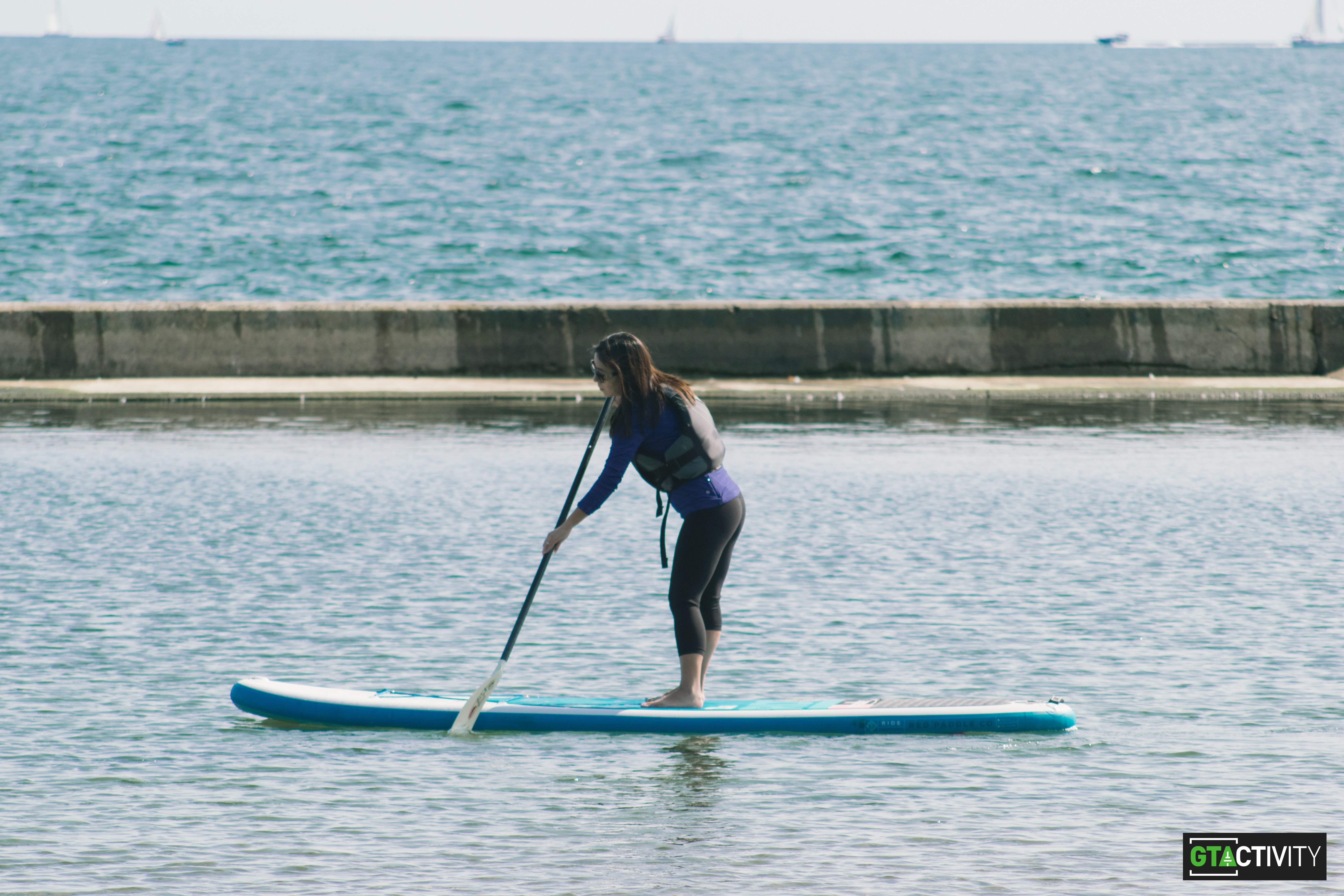
In stand up paddleboarding, the rider stands on a board and uses a long paddle to propel him/herself across the water. The type of board and paddle blade can vary, depending on whether the design is for flat water or surf. In Canada, stand up paddleboards are considered nautical vessels (similar to kayaks or canoes), which means that personal floatation devices (PFDs) are required while engaging in the activity. Stand up paddleboarding has garnered a reputation among participants as a fun activity which also has exercise-related benefits.
Origins & history
Various cultures around the world have, for many thousands of years, used long paddles to propel a watercraft while standing. However, the earliest known examples of stand up paddling on a board occurred in Hawaii, USA in the 1500s. In the 20th Century, lifeguards in Tel Aviv, Israel and surf instructors in Hawaii began standing on boards and paddling in order to have a clear view of people in the water. In the 1990s, stand up paddleboarding became a popular activity for surfers when the weather would not allow surfing, and from there it grew into a more widespread activity. The roots of stand up paddleboarding in Canada are unclear, but Paddle Canada (which was formed in 1971) now oversees and offers training in the activity.
When it happens
Stand up paddleboarding is a warm weather activity, and occurs most commonly in the summer months.
Who takes part
The majority of people who engage in stand up paddleboarding are aged 25-44, and both men and women participate in significant numbers.
Watch
Photos